Common Knowledge Scout
An experiment on how knowledge is collectively created, consulted and developed
Many of today's apps that use AI as their main foundation provide quick answers, but they do little to help us understand the different perspectives that exist on a given topic. KnowledgeScout takes a different approach: AI as a tool for connecting knowledge, experiences and human needs. Commons arise when people have responsabilities, knowledge and resources. Commoning is not just a theory, but an everyday practice: listening, negotiating, sharing and learning. This is precisely the starting point for my current work. I research and experiment with how digital tools, particularly AI, can support Commoning without appropiating it or distorting it. Not as a substitute for human relationships, but as an instrument that makes people's connections and capacity for action more visible.

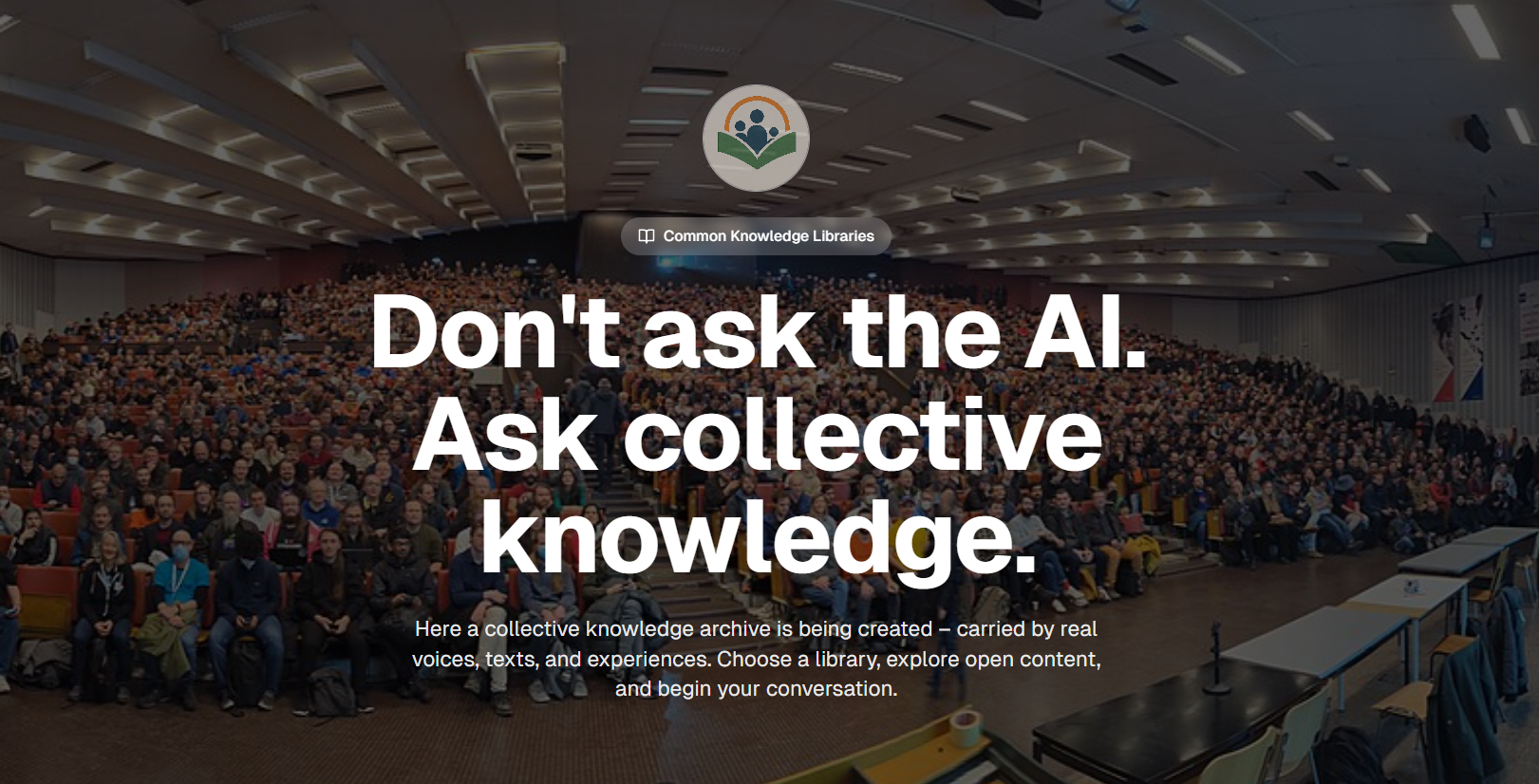
AI as a Tool that Supports Human Connection
In my work, I am interested in viewing AI as a technological tool that people can use consciously. Technology doesn't act on its own. It unfolds its effect when people give it a certain direction and link it to their intentions, values and needs.
With today’s technology, it is possible to take advantage of a very specific capability of AI: that of reading texts, recognising their meaning and reshaping them into other formats. Not because machines understand the content, but because language and meaning have become mathematically describable. This can be used to summarise, translate and structure texts from other contexts, therefore making them readable.

However, this ability can also be used to impose power, distort people's perceptions and/or reinforce existing inequalities. Ideally, it should be used consciously: to facilitate mutual understanding, highlight different perspectives and make collective knowledge accessible.
The source of this knowledge remains human, as it refers to people's experiences, ideas, struggles, language and needs.
We all have the capacity to recognise needs, whether they are from other people, other living beings and, most importantly, the future generations.

In this sense, AI is understood here as a support tool with the following characteristics:
-It doesn't generate knowledge, but rather makes it legible.
-It doesn't make decisions for you, but rather allows for negotitation.
-It doesn't replace connection, but rather supports human connection and the ability to relate to others in everyday life.
Based on this posture, the question arises as to how such a tool should be designed so that it can provide practical support for this form of connection.
KnowledgeScout: A Distributed Knowledge System
KnowledgeScout was born out of this reflection. A distributed knowledge system that can operate locally, offline, with open-source code and autonomously. Each person can contribute with their own knowledge, compile bibliographic material (texts, conversations, lectures, books, etc.) and share this knowledge with others without losing control over it.
A first approach is the library of ‘Commons and Commoning’. Here, texts, lectures and theoretical approaches are brought together. From basic concepts to patterns of Commoning, critiques of capitalism, technological infrastructures, art, culture and theories of transformation.

Knowledge remains contextualised. There’s no single truth, but rather many perspectives. Content can be read and narrated from different points of view (social, linguistic and/or practical), depending on the attitude with which it is approached.
👉 Click the following link to try out the first prototype:
https://knowledgescout.bcommonslab.org/
A Growing Knowledge Landscape
What is being created here is not just a collection of texts, but a library full of knowledge that is constantly growing. A library that draws on three sources: scientific works, theoretical projects and empirical experience.
-All these sources are equally valuable.
-All require translation.
-All gain greater depth when developed together.
Those who participate here aren’t readers or users, but co-authors of this space of knowledge, who holds specialized knowledge, practical experience, questions, doubts and alternatives that have already been tried and tested.
From Individual Need to Collective Practice
I am particularly interested in the question of how individual needs can be made visible without people becoming stuck in individualism. Commoning often begins with very simple questions:
-How can I take good care of my child?
-How can I organize myself to have a meal with other people?
-How can i get from point A to point B without being alone?
-How can I share my interests instead of isolating them?
The decisive step is not the perfect solution, but having the courage to recognize our own needs, first for ourselves and then trusting that others feel the same way. If we manage not to think of selfishness and altruism as opposites, but as simultaneously effective, something new emerges: joint action that sacrifices no one.

A Potential "Commoning Operating System"
From this perspective, KnowledgeScout can be understood as a component of a future operating system based on Commoning. A system that doesn’t seek to dictate people's decisions, but rather serves as a tool for learning and support.
Driven by people, not markets; oriented towards needs, not exploitation; open to contradictions, conflicts, and negotiations.
Using sociocratic methods based on the commons, digital tools could help to:
-Find like-minded people, breaking down social barriers.
-Explain differences, rather than reinforcing them.
-Make visible the possibilities for taking action, rather than just collecting opinions.
-Show places, projects and opportunities where Commoning can be lived out in concrete ways.
Mathematics and artificial intelligence can help recognize patterns and suggest connections, thereby enabling better communication between people.
But... how does KnowledgeScout work?
KnowledgeScout invites you to collectively create, organize and question knowledge. Its digital platform brings together information containing multiple perspectives, thereby promoting experimentation, collaborative reading and critical reflection
Reliable sources of information
Your learning journey begins on the KnowledgeScout homepage, where you will find three large libraries: ‘SFSCON Talks’ (conferences dedicated to open-source software), ‘Commons’ (important topics related to common goods), and ‘Biodiversity in South Tyrol’ (information on habitat protection, biodiversity and environmental policies in South Tyrol).
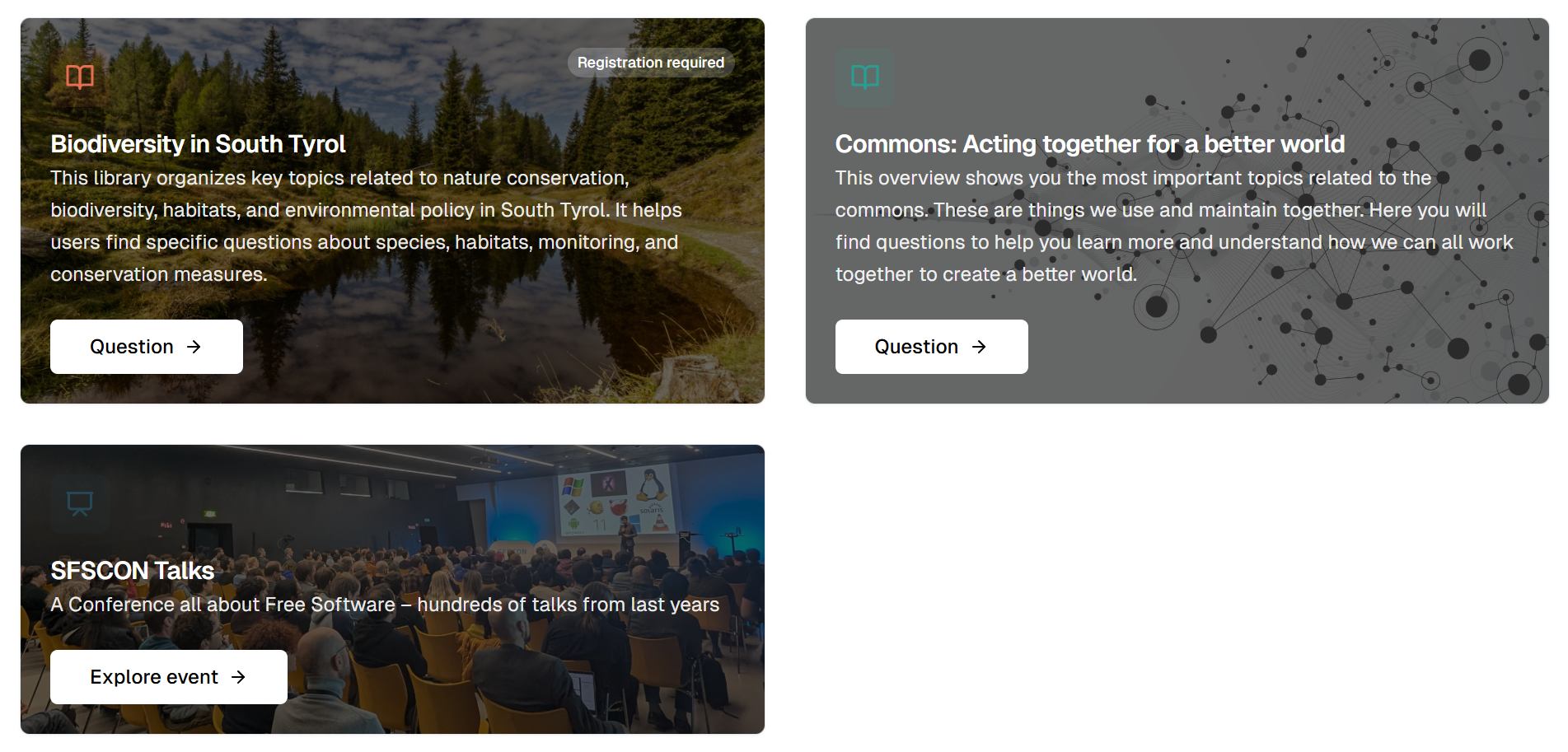
Simply select the one that interests you the most, and once inside, you can explore a selection of books, talks and other sources. All the information you will discover comes exclusively from this library, which is private and confidential. In this way, KnowledgeScout provides content backed by reliable sources, thus avoiding the spread of false or erroneous information.
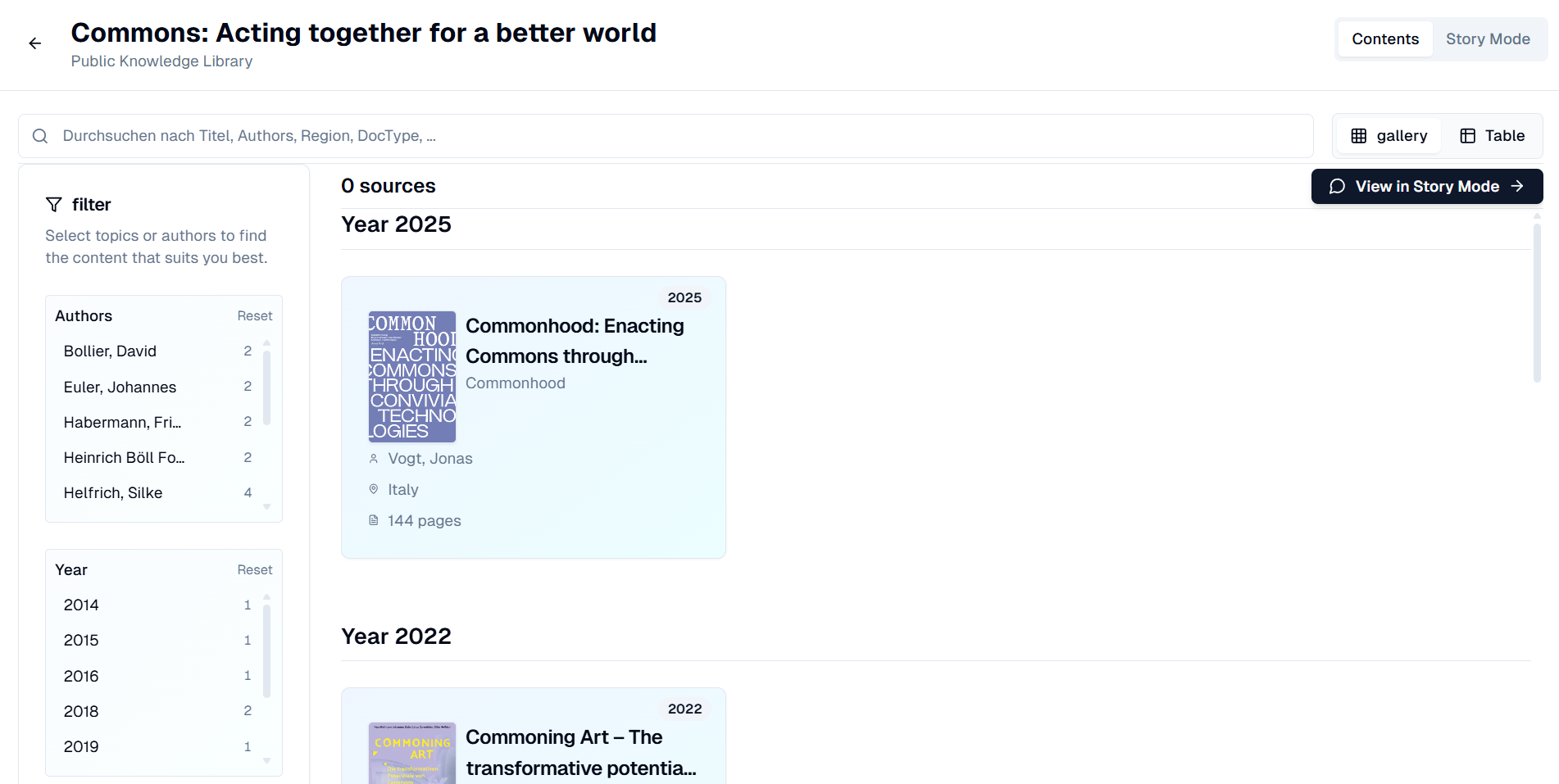
Define your personality
When you select a book or source, KnowledgeScout will show you a series of summaries, which are divided according to the main theme, subtopics and chapters from the original source.
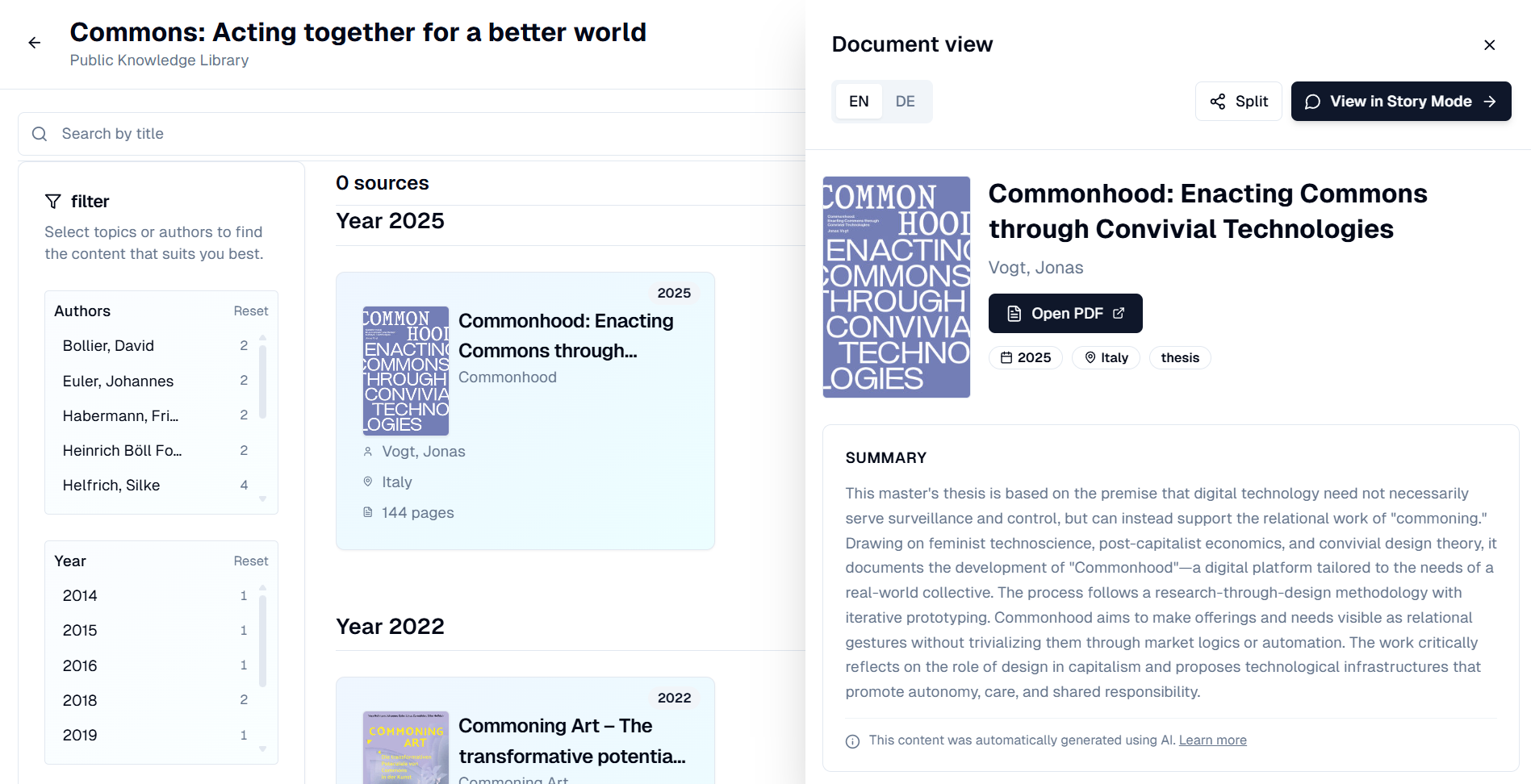
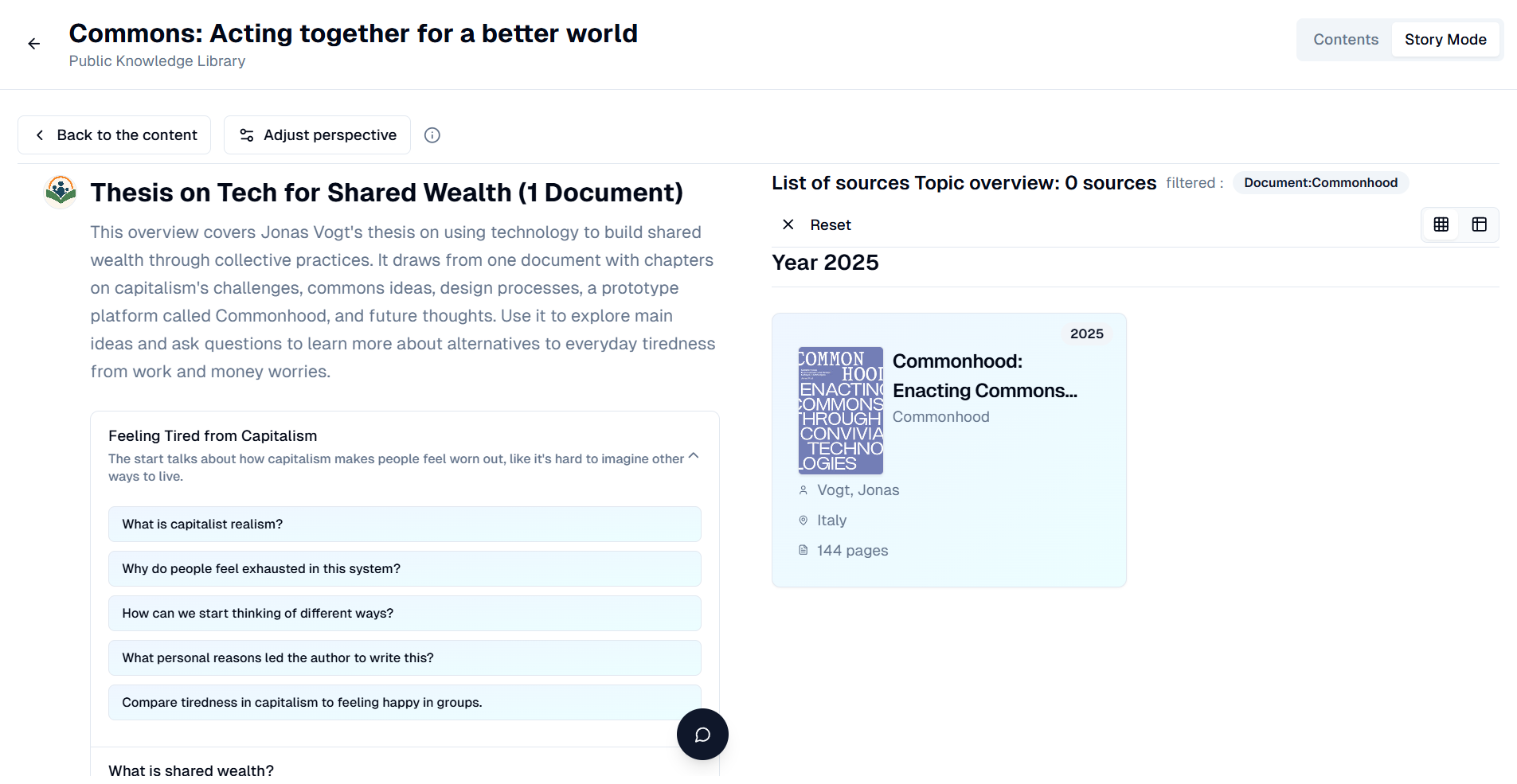
“Story Mode” will take you to a chat that will show you a brief description of the book (or source) accompanied by a series of boxes explaining its main themes. When you open them, you will be given suggested questions you can ask the chat, with the aim of guiding your reading and helping you have a better understanding of the information. You can also write your own question by pressing the black icon in the lower right corner.
Following a line of interest
KnowledgeScout allows you to personalize your experience and tailor the chat to your own learning needs. By pressing the “Adjust perspective” button, you can choose the language, language model, topic of interest and communication style. Once these filters are applied, the system generates responses aligned with your choices. You are the author who creates your own learning story.

Invitation
KnowledgeScout is not a finished product, but an open process.
If you are interested in this project, we invite you to build your own library within the platform, gathering books, talks and other sources of knowledge that you find relevant.
You can do this together with your friends or your community, with whom you will share information, ideas and even new questions.
Create your own commons and spaces for collective learning. Or let us know your opinion so we can improve our platform.
Try KnowledgeScout: https://knowledgescout.bcommonslab.org/
